
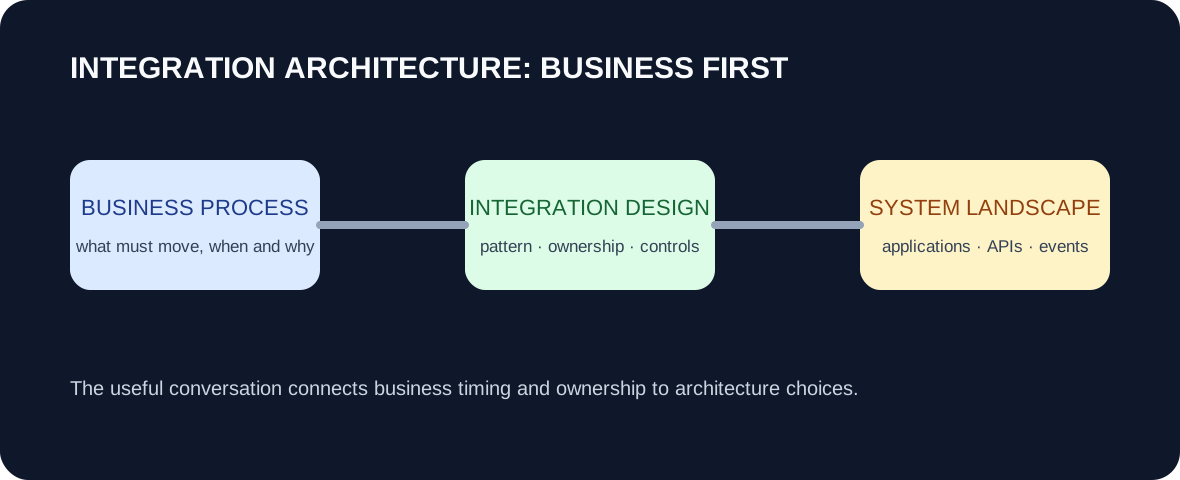
Discuss integration architecture with business teams by starting from the business event and process handoff, not from middleware products. Clarify the source and target process, required data, timing, volume, error impact, ownership, security sensitivity and recovery expectations. Architects can then map those business requirements to an integration style and technology.
Start with the handoff the business already understands
A useful integration discussion begins with statements such as “a customer order accepted here must create a fulfilment demand there” or “an approved supplier invoice must reach finance with the right reference data.” This anchors the conversation in business responsibility before technical implementation details appear.
SAP’s Integration Solution Advisory Methodology explicitly starts with technology-agnostic integration requirements such as integration domains, styles and use-case patterns, then maps them to suitable technologies. That is why a consultant should first learn the business conditions around the interface.
The questions business teams should answer
Ask what triggers the handoff, which data is required, how quickly it must arrive, whether a delayed message blocks operations, how duplicate or missing messages should be handled, who owns the source data, which team resolves failures, and whether confidential or regulated information is involved. These answers influence whether a design should be synchronous, asynchronous, event-driven, batch-oriented or otherwise governed.
Do not force business users to choose the technology
Business stakeholders can explain business criticality; they should not be expected to select protocols or platforms. SAP’s integration guidance uses characteristics and requirements to map use cases to suitable technologies. The architecture team owns that translation and should explain trade-offs in terms of reliability, latency, maintainability, cost and operational support.
Connect architecture to governance
Integration standards matter because interfaces outlive workshops. Teams need shared rules for interface ownership, documentation, reusable patterns, monitoring and change control. SAP’s integration guidance also emphasizes architecture blueprints and implementation guidelines as governance assets, not just diagrams.
Think like a consultant
If a business stakeholder cannot explain why an interface exists, what process it supports and what operational damage a failure causes, the architecture conversation is incomplete. If an architect cannot explain the chosen pattern without relying on product jargon, the design is also incomplete.