
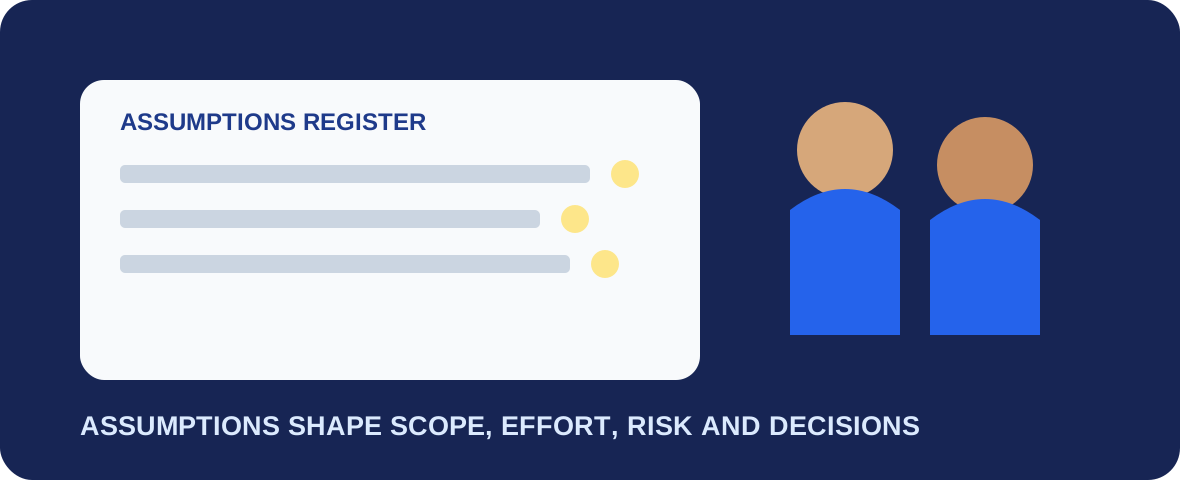
A project assumption is something the implementation plan treats as true before it has been fully proven. Examples include data being available on time, key users being available for workshops, a standard integration being sufficient, or a country process fitting the global template. If an assumption turns out to be false, scope, effort, timeline or solution design may need to change.
Why assumptions matter early
SAP Activate places planning, scope, governance, resources and workstream preparation in the early phases of implementation. That planning depends on explicit expectations. A hidden expectation behaves like an unmanaged risk; a documented assumption can be validated, assigned to an owner and converted into an action when evidence changes.
Four ways an assumption changes delivery
First, it can change scope: a process believed to be standard may need an extension. Second, it can change effort: data cleansing or integration work may be larger than expected. Third, it can change sequence: a dependency that is late can block configuration or testing. Fourth, it can change risk: an uncertain assumption may need mitigation before the project commits to a milestone.
How consultants should manage assumptions
Record the statement clearly, identify why it was made, assign an owner, define what evidence will validate it, and set a review point. Link important assumptions to the relevant scope item, estimate, dependency or risk. This complements project estimating and scope definition.
Common mistake
Do not use assumptions to disguise unresolved decisions. “Business will confirm later” is not a useful assumption unless the project records what decision is needed, by when, and what happens if it is delayed.