
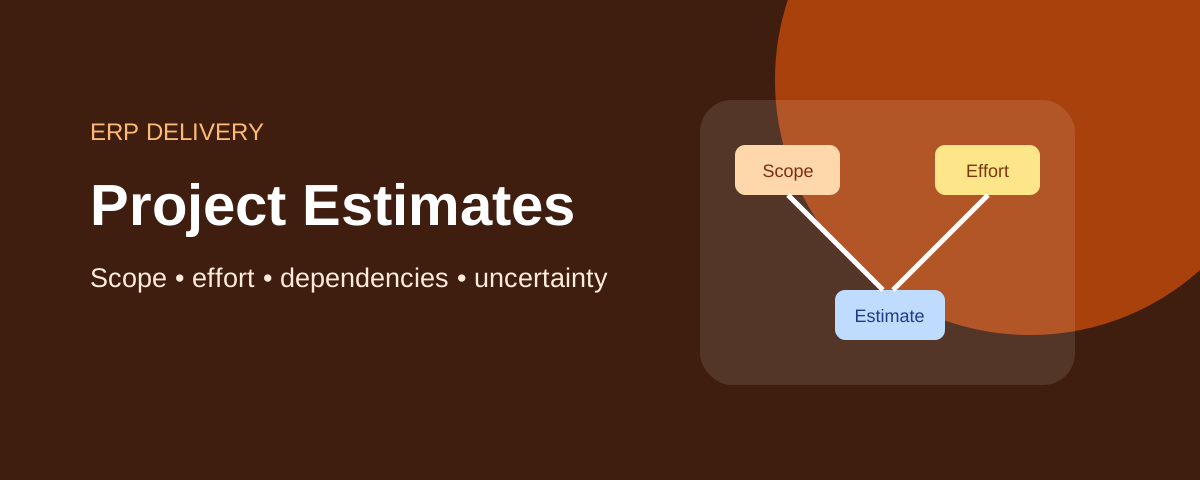
An SAP project estimate is typically created by translating scope into deliverables and tasks, estimating the effort required by different roles, sequencing that work against phases or sprints, and documenting assumptions, dependencies and uncertainty. As discovery and Fit-to-Standard produce better information, the estimate can be refined.
Estimation starts with scope quality
A team cannot estimate precisely what it has not defined. “Implement finance” is too broad; an estimate improves when the team knows the entities, processes, integrations, data migration responsibilities, testing approach, extensions, countries and release strategy involved. This is why estimation and scope definition are tightly connected.
Break the project into estimable work
SAP Cloud ALM models implementation work through projects, phases, deliverables, tasks, user stories, workstreams and timeboxes. SAP documentation also allows estimated effort to be maintained on tasks and requirements. In practice, this supports a basic estimation discipline: decompose a large promise into smaller pieces that can be reasoned about.
| Estimate input | What it changes |
|---|---|
| Scope breadth | Number of processes, entities, countries and workstreams |
| Complexity | Extensions, integrations, data transformation and exceptions |
| Role mix | Functional, technical, data, testing, security, change and PM effort |
| Delivery model | Phases, sprints, waves, parallel teams and release timing |
| Assumptions | Customer availability, data quality, environment readiness and reuse |
| Risk / uncertainty | Contingency, ranges and confidence level |
Effort and duration are not the same thing
Forty hours of effort does not automatically mean one calendar week. Some tasks wait on decisions, environments or predecessor work; some can run in parallel; others require several specialists at different moments. Duration depends on sequencing and capacity, while effort measures the work itself.
Always ask what the estimate assumes.
A number without assumptions can look precise while being fragile. Clarify what is expected from customer teams, what data condition is assumed, how many integrations are included, which testing cycles are planned and what would trigger re-estimation.
Why estimates change after Explore
SAP Activate uses Fit-to-Standard in Explore to confirm solution fit and identify delta requirements. That produces information that may not have existed during an early proposal. If new extensions, interfaces or data issues emerge, the estimate should respond to the new evidence rather than pretend the original uncertainty never existed.
Estimate ranges can be more honest than one number
Early in discovery, a range can communicate uncertainty better than a single exact figure. As scope becomes validated and work is decomposed, confidence can increase and the range can narrow. The objective is not false precision; it is a transparent basis for planning and decision-making.
What makes an estimate credible?
You should be able to trace the estimate back to scope, explain the major work packages, identify the role mix, show dependencies, state assumptions and describe how change will be handled. If the only explanation is “similar projects usually take this long,” the estimate may be a useful starting heuristic but not yet a strong delivery model.