
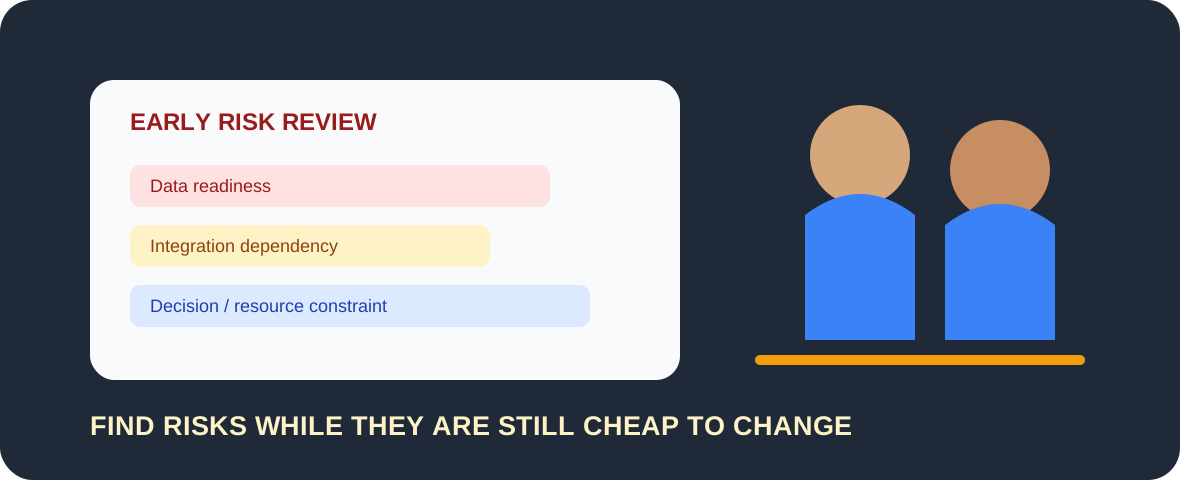
Implementation risks are identified early by examining the assumptions and dependencies behind the project plan, not just by maintaining a risk register. Teams review whether scope is understood, business decisions are timely, data is usable, integrations are feasible, environments are available, key users have capacity, testing is realistic and cutover dependencies are known.
Risk starts as uncertainty
SAP Cloud ALM for Implementation supports project planning, tasks, requirements, process scope and risk management. The practical value is not the tool itself; it is the discipline of connecting a risk to the affected work, owner, likelihood, impact and response. A vague concern such as “data may be difficult” is weak. A useful risk states which data object is uncertain, why, what milestone it threatens and what evidence will reduce the uncertainty.
Where teams usually find early risks
Look for gaps between the plan and reality. Scope risk appears when requirements are still ambiguous. Data risk appears when ownership, quality or volumes are unknown. Integration risk appears when external systems, interfaces or security dependencies are not confirmed. Resource risk appears when key business experts cannot attend workshops or testing. Decision risk appears when governance cannot resolve open choices quickly enough. Readiness risk appears when training, cutover, support or operational ownership is postponed until late in the project.
Risk versus issue
A risk is an uncertain future event or condition; an issue has already happened. If a data extract might be late, that is a risk. If the extract is already overdue, it is an issue requiring recovery. Good governance keeps these distinct so the team can spend enough energy preventing problems rather than only reacting to them.
What to do with an identified risk
Name an owner, define mitigation, set a trigger or review date, and connect the risk to the affected deliverable or milestone. Revisit it when evidence changes. Related topics include project assumptions and implementation scope.