
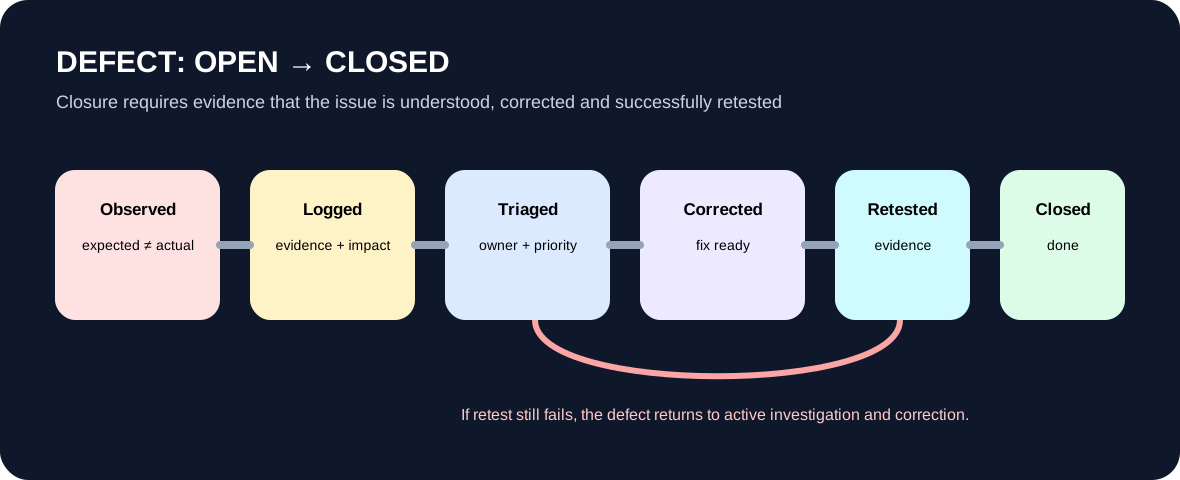
A defect moves from open to closed by turning a failed or unexpected test result into a traceable issue, assigning ownership and priority, correcting the underlying cause, and retesting the affected behavior. Closure should happen only when the evidence supports it. In SAP Cloud ALM, failed test actions can lead to defects, existing non-closed defects can be assigned to test execution, and analytics treats Closed defects as done.
Open starts with a clear mismatch
A useful defect describes the expected behavior, the actual behavior, the affected scenario and enough evidence to reproduce the problem. Without that context, the team may spend time debating whether the issue is configuration, code, data, integration, authorization, environment or even an incorrect test case. The first quality gate is therefore not the status label; it is whether the issue can be understood and investigated.
Triage gives the defect an owner and business meaning
Teams typically review impact, urgency, reproducibility and the process or release affected, then assign the issue to the right owner. A defect that blocks a critical end-to-end scenario is different from a cosmetic observation with no business impact. Priority should guide attention without replacing root-cause analysis.
Correction is not the same as closure
A developer, configurator or process owner may identify and correct the cause, but the defect is not proven resolved until the relevant scenario is retested. SAP Cloud ALM distinguishes failed test actions that require retesting, and defects can remain associated with the execution context until the issue is resolved. Teams should preserve the correction reference and the retest evidence rather than treating “fix delivered” as the finish line.
Retest decides whether the defect can close
Retest should reproduce the original conditions closely enough to show whether the mismatch is gone. If the test still fails, the issue returns to active investigation or correction; if it passes and no related acceptance criterion remains open, the team can close the defect according to its project governance. Closed defects represent completed defect work in SAP Cloud ALM analytics and cannot be assigned as active defects to new test runs.
Closure should preserve the audit trail
A good closed defect leaves a compact story: what failed, why it mattered, who owned it, what changed, where the correction was delivered, what was retested, and what evidence justified closure. That history supports regression selection, release decisions and later analysis when a similar symptom appears again.
Continue with How Test Cycles Are Planned, How Negative Test Cases Are Designed, How Regression Testing Works and the Consulting & ERP Projects hub.