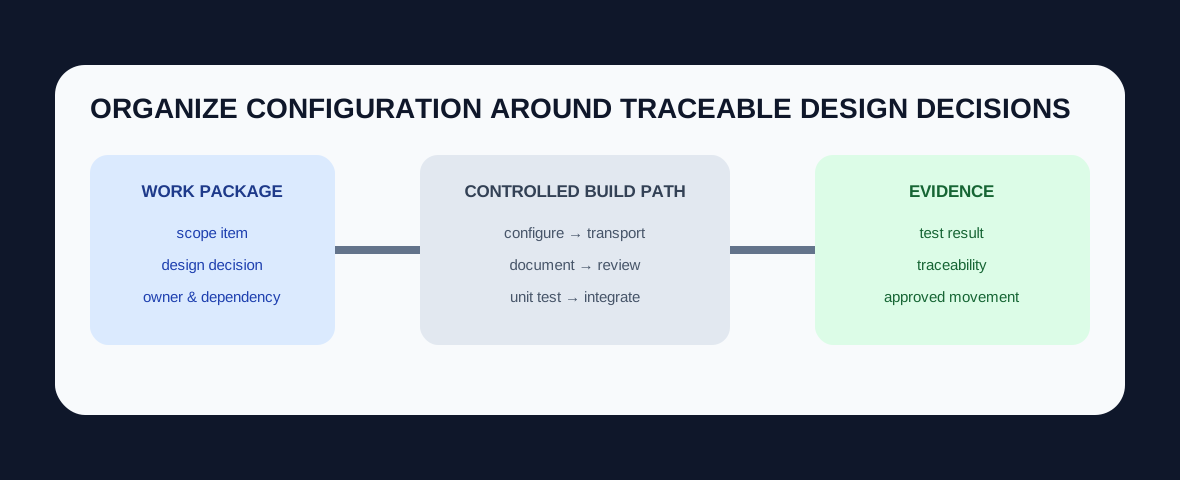
Configuration work in an SAP project is usually organized by process area or workstream. Teams take approved design decisions, assign accountable configuration owners, make changes in the permitted development or configuration environment, document the rationale, move approved changes through the landscape using controlled transport or deployment mechanisms, and verify the result through unit and integration testing before release.
Configuration starts from an approved design baseline
The work should begin from agreed process and solution decisions, not from experimenting directly in production. That baseline defines what the business needs, which standard behavior is being used, what organizational and master-data assumptions apply, and which design choices must remain traceable.
This is why configuration follows design sign-off and becomes part of realization or build. The configuration task is the implementation of an approved decision, not a substitute for the decision itself.
Work is usually grouped by workstream and process ownership
Finance, procurement, sales, manufacturing, quality, security, integrations and other areas typically have their own configuration responsibilities, but the boundaries are not absolute. One process may require coordinated settings across several modules or teams.
A useful working model is to keep each configuration item linked to the requirement or design decision it implements, the person responsible, the system object or settings changed, dependencies, transport or release reference, and its test evidence.
System landscapes create separation of duties
SAP landscapes commonly separate development or configuration work from later quality and productive environments. SAP documentation on change and transport concepts emphasizes controlled movement of changes through systems rather than direct uncontrolled production changes.
The exact mechanism depends on the product and deployment model. Traditional ABAP landscapes may use transport requests, while cloud products can use product-specific configuration and deployment processes. The governance principle is the same: changes should be traceable, reviewable and promoted in a controlled sequence.
Testing is part of configuration work, not an afterthought
A functional consultant should first prove that the configuration behaves as intended in a focused unit scenario. Later, testing scope expands to integration and end-to-end scenarios so that the project can see whether neighboring modules, interfaces, roles, reports and data still behave correctly.
A configuration change that works in isolation can still break an integrated process. That is why dependencies and regression risk need to be understood before a change is promoted.
Controls that matter
- Design traceability: every material configuration change should connect to an approved requirement or design decision.
- Ownership: one person should be accountable for the correctness of the configuration item even when several teams contribute.
- Landscape discipline: use the permitted environment and deployment path; avoid direct productive experimentation.
- Transport coordination: manage sequence and dependencies between related changes.
- Evidence: retain enough configuration rationale and test evidence to support review, defect analysis and future maintenance.
- Release governance: promote only when required reviews and tests are complete.
Consultant thinking: organize around business outcomes
A project can become inefficient when configuration is tracked only as a long list of technical settings. Group the work around business capabilities and process outcomes: what decision is being implemented, who depends on it, and how will the team know the intended process now works?
Key takeaway
Configuration work is organized delivery. The strongest project setup connects approved design, accountable ownership, controlled system changes, transport or deployment governance, testing and evidence so that each setting has a clear business reason and a verifiable path to production.