
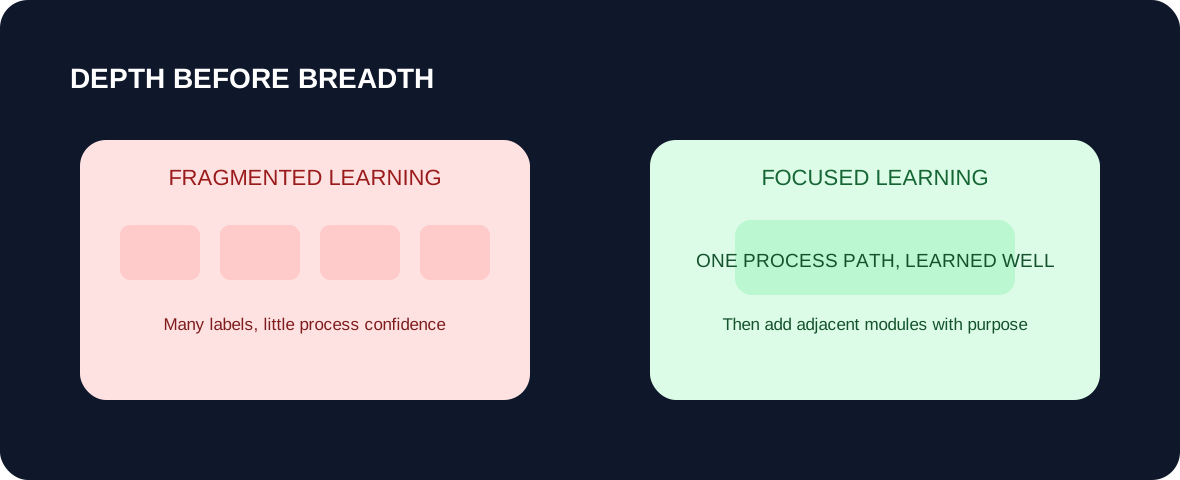
Do not learn multiple SAP modules at once when you are still struggling to explain one end-to-end process, when you are collecting terminology instead of practicing, when your target role does not require the extra modules, or when splitting attention prevents you from building examples, integration understanding and interview-ready depth.
Fragmentation is the real risk
Beginners sometimes respond to uncertainty by adding more topics: a little FI, a little MM, some SD, perhaps ABAP too. The result can feel productive because many terms become familiar, yet the learner may still be unable to explain how one transaction moves through a real business process.
SAP Learning Journeys are designed as structured skill paths. That is a useful model for beginners: pursue a coherent learning objective rather than assembling unrelated pieces merely because they are available.
Four signs you are adding breadth too early
You cannot explain the first module’s business process without transaction codes. You have not practiced realistic scenarios or created your own examples. You are adding modules mainly to make a resume look broader. Or you keep switching learning paths whenever a new salary claim, trend or recommendation appears.
When breadth does become useful
Broader knowledge helps when it follows real integration. For example, an MM learner may add FI context to understand invoice and accounting consequences, or a PP learner may add MM and QM context because production depends on materials and quality. The second area should make the first more useful, not merely make the syllabus longer.
Do not confuse specialization with narrow thinking
You can learn one primary module deeply while still understanding the surrounding business process. A good functional consultant knows where upstream and downstream teams connect, even without claiming equal expertise in every module.
What to do next
If you are uncertain, revisit how to choose your first SAP module. If you already have a strong primary path, read when learning two SAP modules makes sense.