
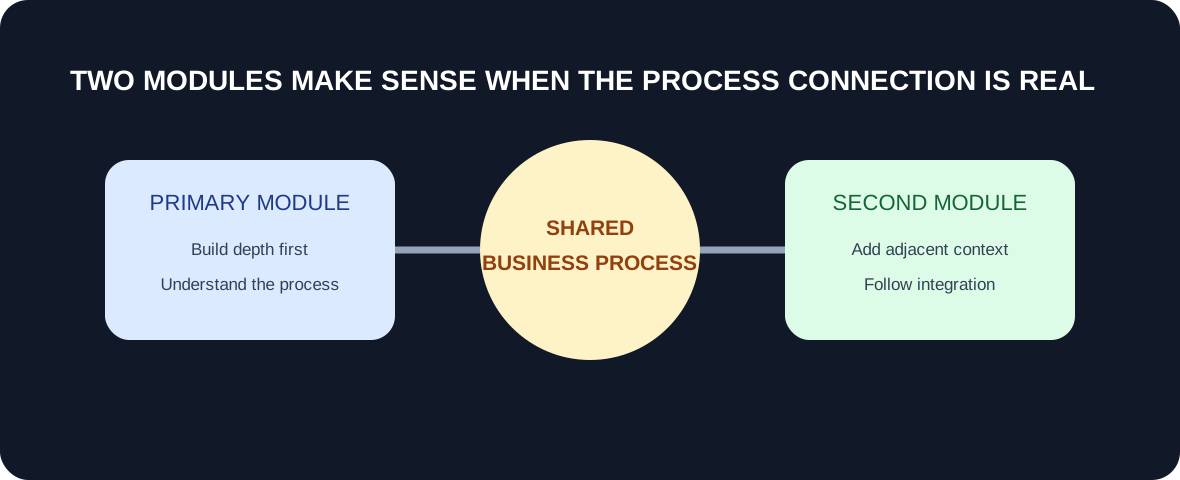
Learning two SAP modules makes sense after you have a credible foundation in one and the second module helps you understand an adjacent process, integration point or target role. Good pairings are usually connected by real business work: finance with procurement, sales with finance, production with materials, or a functional module with a technical or integration skill that supports delivery.
Depth in one path should come first
Before adding a second module, you should be able to explain the first module’s core business process, master data, major documents or objects, common handoffs and basic exceptions. If the first path is still mostly memorized terminology, adding another usually increases confusion rather than capability.
SAP Learning Journeys are organized around building specific skills and role-relevant capabilities. That structure supports a practical learning strategy: build one coherent skill path, then extend it intentionally where the work crosses boundaries.
Three situations where a second module helps
First, your target role regularly crosses modules. A procurement consultant benefits from understanding accounting consequences; a production consultant benefits from inventory and costing context. Second, the second module explains an integration point you keep encountering. Third, you already have domain experience spanning both processes and want your SAP learning to reflect that real-world overlap.
Useful pairings are contextual, not universal
FI and MM can be a strong combination for procure-to-pay understanding; SD and FI for order-to-cash; PP and MM for planning and material supply; PP and QM for production quality; or a functional path with ABAP/BTP/integration literacy for stronger collaboration with technical teams. The right combination depends on the work, not on a universal ranking.
Do not turn two modules into two half-learned modules
Keep a primary path. Use the second to strengthen integration thinking, not to split your attention evenly from day one. If you cannot yet explain why the second module matters to your first, you probably do not need it yet.
What to do next
Review how to choose your first SAP module and how much business knowledge an SAP consultant needs. Build one process map that clearly shows where your first and second modules interact.