
SAP is a company that provides enterprise software used to run and connect business processes. In an ERP context, SAP software helps functions such as finance, procurement, sales, manufacturing, supply chain, and other operations work with shared business data and coordinated process controls. A useful beginner explanation is: “When one business event happens, the relevant teams can see and act on its connected consequences instead of maintaining separate versions of the truth.”
Use one ordinary business story
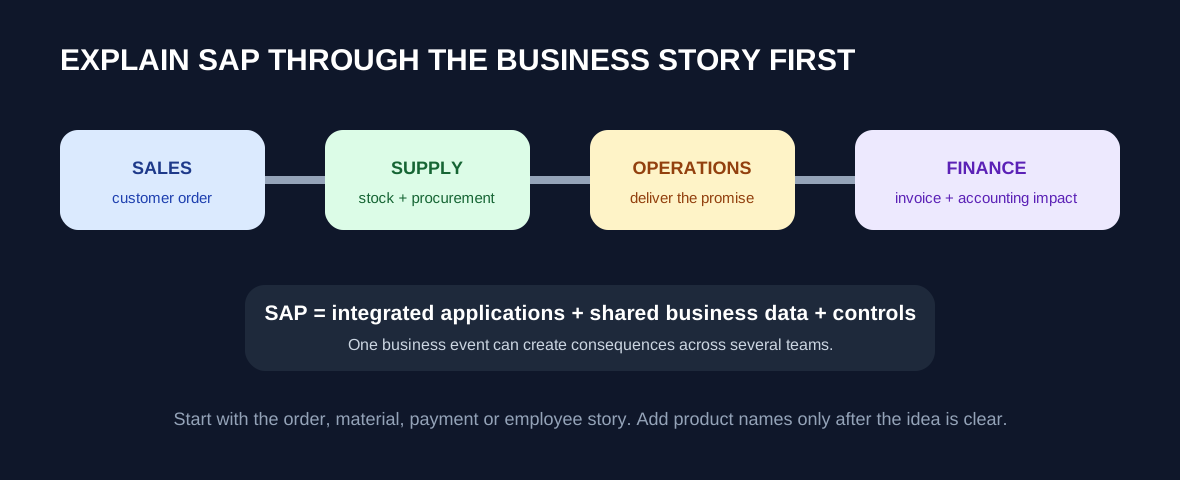
Imagine a customer orders 100 units. Sales records the demand. The business checks whether stock is available or whether supply is needed. Warehouse and logistics prepare delivery. Billing creates the customer charge. Finance records the accounting consequence. The important ERP idea is not that every department uses the same screen; it is that the process and data are connected enough for one event to move across functions with controls and traceability.
This is why SAP is easier to understand through business and project context than through a list of module codes.
Then explain what ERP contributes
ERP stands for enterprise resource planning, but the acronym is less useful than the operating idea. ERP brings important business transactions, master data, organizational structures, and controls into a coordinated enterprise system. This reduces disconnected handoffs and makes it easier to trace how an event affects multiple functions.
What “SAP” does not mean
SAP is not one single module, one accounting package, or one job role. The SAP portfolio spans ERP and many adjacent areas. Different companies use different products, editions, integrations, and process designs. A beginner therefore should not be told that “SAP always works exactly this way.” Explain the core integration idea first, then introduce the specific solution landscape.
A 30-second explanation
“SAP makes enterprise software that companies use to run connected business processes. For example, a customer order can affect sales, inventory, delivery, billing and finance. Instead of each department maintaining isolated records, an ERP system coordinates the process using shared business data and controls. SAP has many products and specialist areas, but that connected-process idea is the easiest place to start.”
Common beginner mistakes
- Starting with transaction codes or product acronyms.
- Calling SAP only accounting software.
- Describing modules as isolated departments rather than connected process responsibilities.
- Claiming every company uses the same SAP landscape or process design.
- Explaining configuration before explaining the business problem it solves.
Consultant thinking: change the explanation for the audience
An accountant may understand SAP fastest through closing, payables, and controls. A production engineer may connect through planning, materials, and shop-floor execution. A developer may connect through applications, data, APIs, and extensions. The concept is the same, but the entry point should match the listener's world.
If you can explain SAP clearly to a non-SAP colleague, you are also practicing a core consulting skill: translating system concepts into business language. That complements the broader question of how much business knowledge an SAP consultant needs.
Key takeaway
Explain SAP as a way to connect business processes, data, controls, and consequences across an enterprise. Start with a familiar business event and add SAP terminology only after the listener understands why integration matters.