
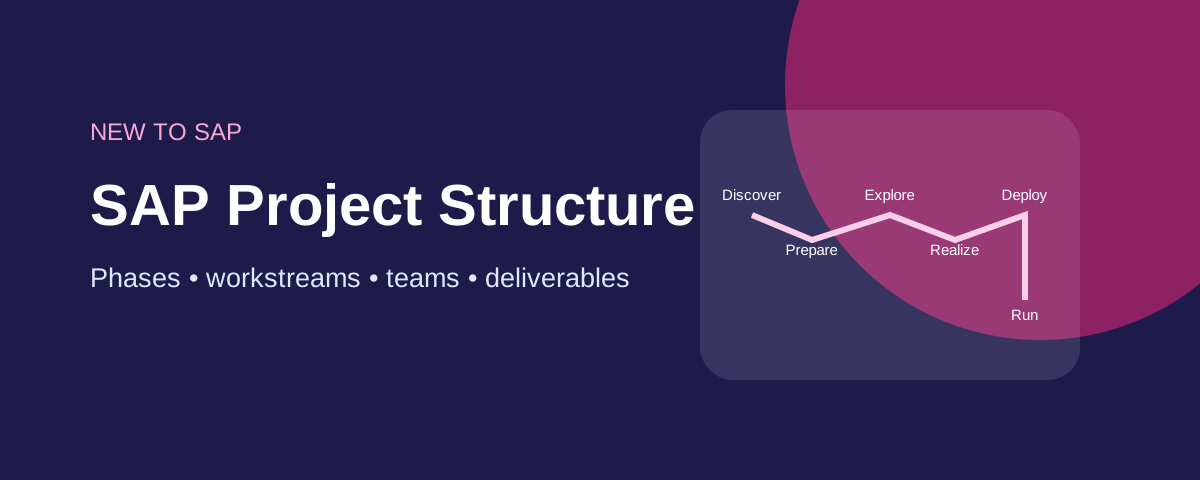
SAP projects are commonly organized using a lifecycle such as SAP Activate, with phases including Discover, Prepare, Explore, Realize, Deploy and Run. Inside those phases, parallel workstreams handle process design, configuration, integrations, data, testing, security, change management, cutover and other responsibilities.
The phase structure gives the project a shared clock
SAP Activate gives teams a common sequence. Discover establishes the opportunity and direction. Prepare starts and organizes the implementation. Explore validates solution fit. Realize configures, extends and tests. Deploy prepares production and cutover. Run covers productive operations and continuous improvement.
| Phase | Simple way to think about it |
|---|---|
| Discover | Why change, what solution direction, what value? |
| Prepare | Who is on the project and how will it run? |
| Explore | How well does standard SAP fit and what gaps remain? |
| Realize | Build, configure, integrate, test and enable users. |
| Deploy | Get production, data, users and operations ready for go-live. |
| Run | Operate, support, optimize and adopt further innovation. |
Workstreams run across the phases
A phase does not belong to just one type of consultant. Functional design, integrations, data migration, extensibility, security, testing, organizational change, training and project management often progress in parallel. SAP Cloud ALM reflects this by linking project tasks to scopes, workstreams, deliverables, timeboxes and responsible people.
Do not confuse a project phase with a job role.
A functional consultant may contribute in Explore, Realize, Deploy and Run. A technical consultant may enter early for architecture and integration decisions. Business users often participate heavily in workshops, testing and readiness. Roles cross phase boundaries.
Teams are usually layered
Large projects commonly have governance and leadership roles, process or functional teams, technical teams and customer business representatives. The exact titles differ, but the operating logic is similar: decisions need owners, delivery needs accountable teams, and business validation cannot be outsourced entirely to the implementation partner.
What happens inside Realize?
Realize is not one long build. SAP Activate uses agile concepts such as product backlog items and sprints. Requirements identified during Explore can be refined and implemented incrementally, with configuration, extensions, testing and defect resolution progressing together.
Why this matters for someone entering SAP
Job descriptions make more sense once you understand the project system around them. A “functional consultant” is not simply configuring screens; the role participates in process validation, backlog clarification, testing and business collaboration. A developer or integration consultant works within the same delivery structure but owns different solution components.