
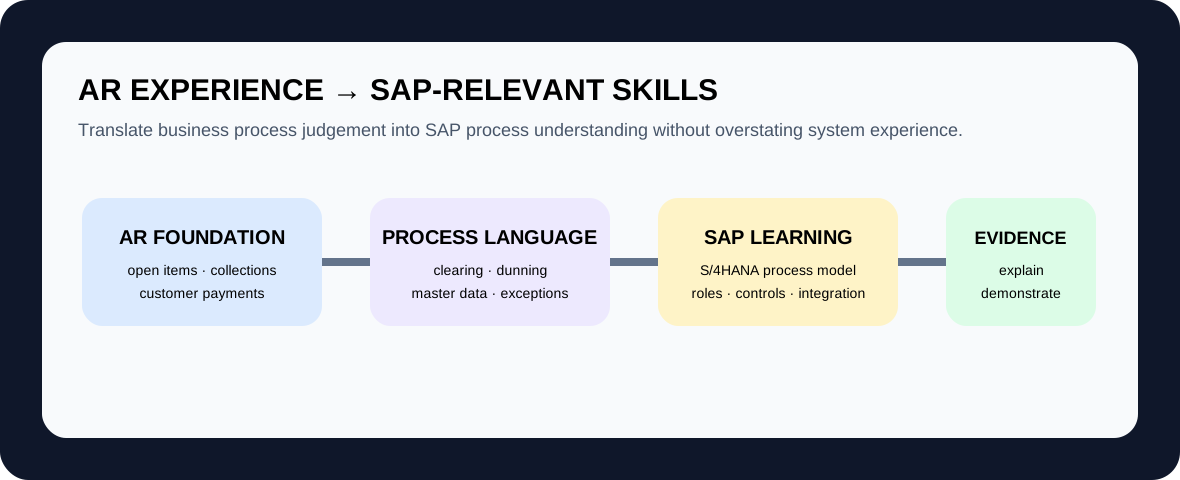
The most transferable Accounts Receivable skills are process skills: understanding customer open items, incoming payments, clearing, payment differences, dunning, reconciliations, customer master data, exception handling and the controls around those activities. Those skills help you understand what SAP is representing. They do not by themselves prove SAP configuration, implementation or project experience.
Transfer the business logic, not the job title
An AR professional already knows why unpaid invoices matter, how customer balances change, what happens when cash does not match an invoice, why overdue items need follow-up, and how exceptions affect reporting. SAP learning becomes easier when each system concept is connected to one of those business questions. The transferable asset is the judgement behind the process.
Open-item and clearing thinking transfers directly
SAP receivables processes revolve around customer items that remain open until they are cleared. Experience matching payments to invoices, investigating short or excess payments, managing unapplied cash and explaining customer balances gives you a strong mental model for learning SAP clearing behavior. SAP Learning also covers payment differences, bank-statement postprocessing and analysis of open and cleared items.
Customer master-data judgement also transfers
AR teams depend on accurate customer terms, payment behavior and account information. SAP S/4HANA represents customer accounting data through Business Partner and company-code views, including fields such as reconciliation account, payment terms and dunning terms. Existing experience spotting bad master data or explaining downstream consequences is useful even before you learn how those fields are configured.
Dunning, collections and exception handling are strong bridges
If you have worked with overdue balances, reminder cycles, promises to pay, disputes or collections, you already understand that not every overdue item should be treated identically. SAP dunning and receivables processes add system rules and statuses around that judgement. The transferable skill is knowing which business facts should influence the next action and which exceptions need review.
What does not automatically transfer
Do not claim configuration, transport, cutover, data migration, SAP testing ownership or implementation design merely because you performed the underlying AR process in another system. Those are separate competencies. A strong transition statement distinguishes “I understand this business process deeply” from “I have implemented this in SAP.” That distinction makes your learning plan more credible.
Continue with Best-Fit SAP Paths for AR Professionals, How to Build a Transition Portfolio, the SAP FI / FICO hub, and the Careers & Career Switching hub.