
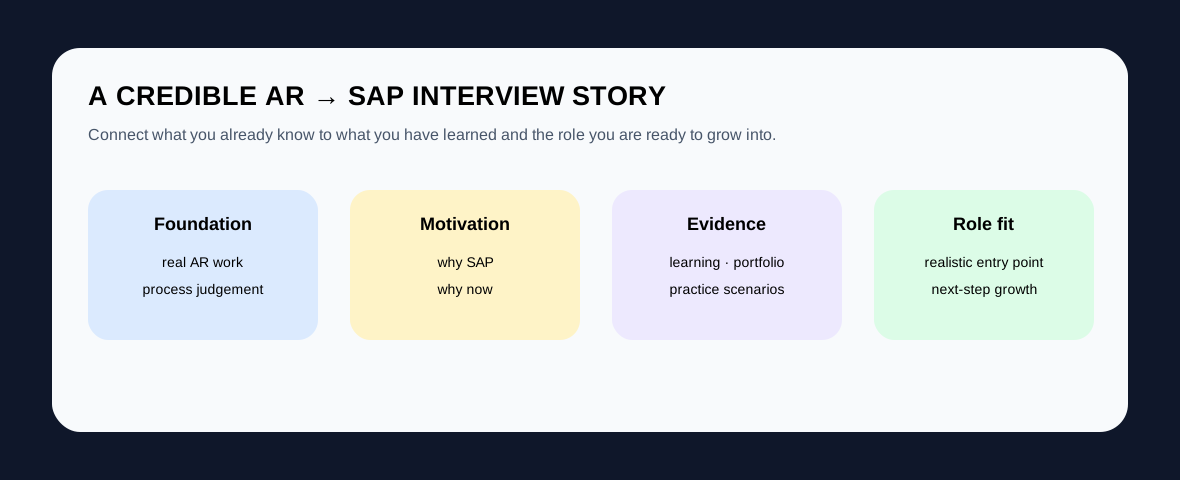
Explain the move as a progression: first, the Accounts Receivable work you genuinely know; second, why SAP is the logical next learning direction; third, the evidence you have built through structured study and practice; and fourth, the realistic SAP role you are targeting. Keep work experience and learning evidence clearly separated.
Begin with the business foundation, not with software
Your strongest opening is usually the AR responsibility you actually owned: customer invoices, open-item follow-up, incoming payments, clearing decisions, ageing, dunning, reconciliation or exception handling. Give one concrete example that shows judgement. This proves that your transition starts from a real business process rather than from memorized SAP vocabulary.
Explain why SAP is a logical next step
Connect your motivation to the process you already understand. SAP receivables learning covers open receivables, customer payments, dunning, collections and related controls, so an AR professional can explain that the goal is to understand how an enterprise system represents and integrates work they already know from the business side. Avoid generic claims that SAP is simply “in demand.”

Show evidence instead of claiming readiness
Describe the learning journey precisely: which SAP receivables concepts you studied, which practice scenarios you worked through, what portfolio artifacts you built and what you can now explain. A sample clearing scenario, dunning walkthrough, process map or test case is evidence of learning. It is not evidence that you configured a production client or delivered an implementation.
Match the story to a realistic role
A career transition is more convincing when the role target matches the evidence. You might position yourself for a junior functional, support, testing, business-analysis or process-oriented role where AR knowledge is useful and SAP capability can deepen. State what you can contribute immediately and what you still expect to learn under real project or support conditions.
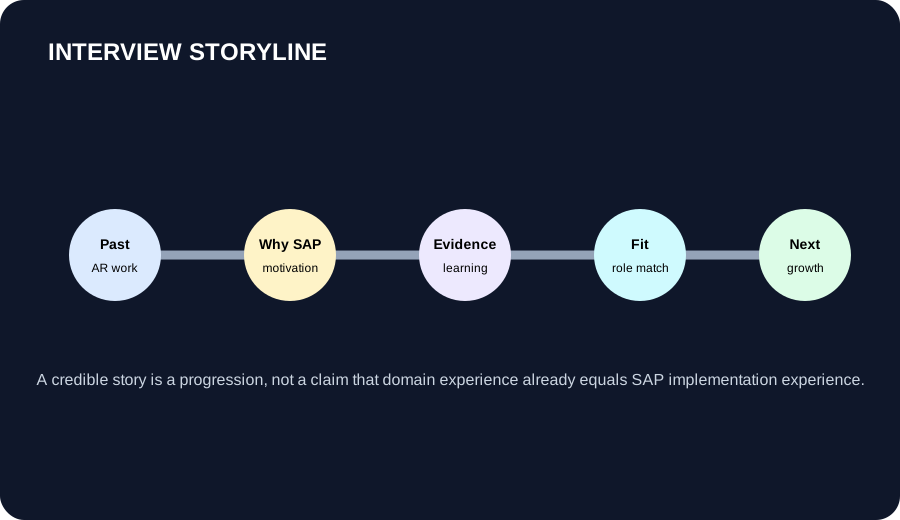
A compact interview structure
A useful answer can fit into four parts: “I built my foundation in AR through these responsibilities. I became interested in SAP because it connects those processes across finance and the wider business. I have since built evidence through these learning scenarios and artifacts. I am now targeting this type of role, where I can contribute domain judgement while continuing to build SAP delivery experience.” Adapt the wording to your actual history; do not memorize claims that are not yours.
Continue with How to Build a Transition Portfolio, Best-Fit SAP Paths for AR Professionals, Which AR Skills Transfer Into SAP, and the Careers & Career Switching hub.