
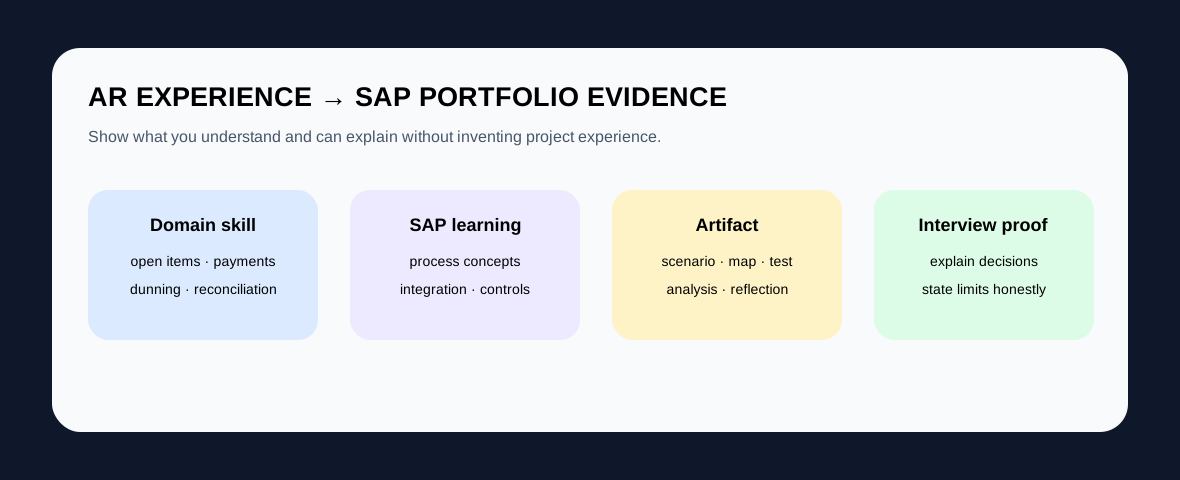
Build the portfolio around evidence you can defend: real Accounts Receivable process knowledge, SAP concepts you have studied, and clearly labelled learning artifacts that show how you reason through customer invoices, open items, incoming payments, clearing, dunning, reconciliation and exceptions. Do not present simulations, self-study or practice work as client delivery.
Start with the AR judgement you already own
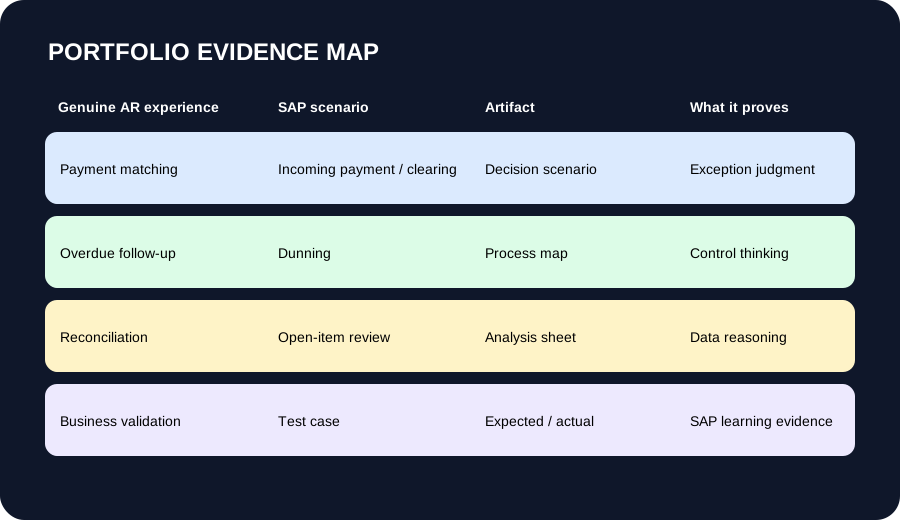
Choose situations you genuinely understand from Accounts Receivable work: a payment that cannot be matched, an overdue balance that needs the right follow-up, a reconciliation difference, a customer dispute or an exception in cash application. Describe the business objective, the control risk and the decision you would make. That gives the portfolio a domain foundation before SAP terminology is added.
Translate each situation into an SAP learning scenario
SAP Learning materials describe receivables around master data, open receivables, incoming payments, dunning, period-end activity and related processes. Use those concepts to explain how your existing AR knowledge maps into an SAP context. The purpose is to demonstrate understanding of the process and system representation, not to imitate a proprietary exercise or claim configuration ownership you have not had.
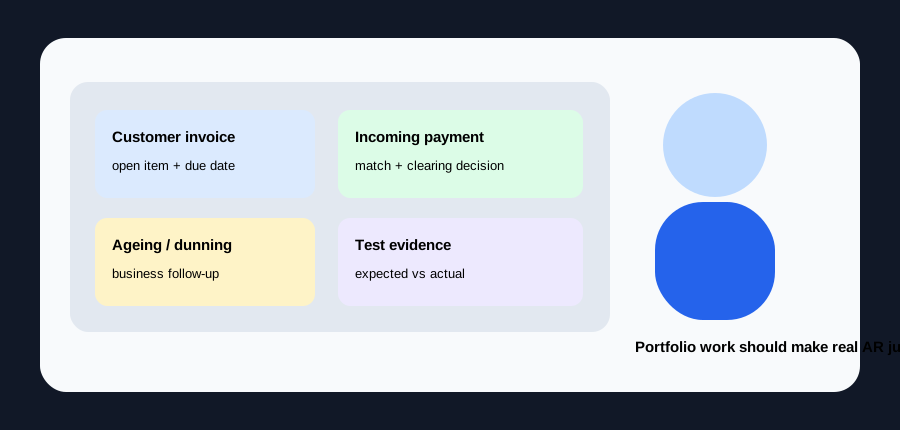
Build artifacts that reveal how you think
Useful artifacts include a process map for invoice-to-cash handoffs, a payment-matching scenario with alternatives, an ageing or dunning decision note, a reconciliation analysis, a test case with expected and actual outcomes, and a short reflection on what the exercise does and does not prove. A recruiter or interviewer should be able to see the reasoning behind the artifact, not just a polished diagram.
Separate evidence from experience claims
Label practice work clearly. Terms such as “learning scenario,” “self-study process map,” “sample test case” or “portfolio exercise” are more credible than implying production access, client ownership, configuration or implementation delivery. If you have genuine AR work experience, say exactly what you owned there and separately explain what you have learned about SAP.
Design the portfolio for an interview conversation
Every artifact should answer four questions: What business problem is this solving? What SAP concept is relevant? What decision or control matters? What did you personally do to build or validate this learning evidence? This structure makes the portfolio useful even when the interviewer never opens every file.
Continue with Best-Fit SAP Paths for AR Professionals, Which AR Skills Transfer Into SAP, Skills Gaps to Close, and the Careers & Career Switching hub.