
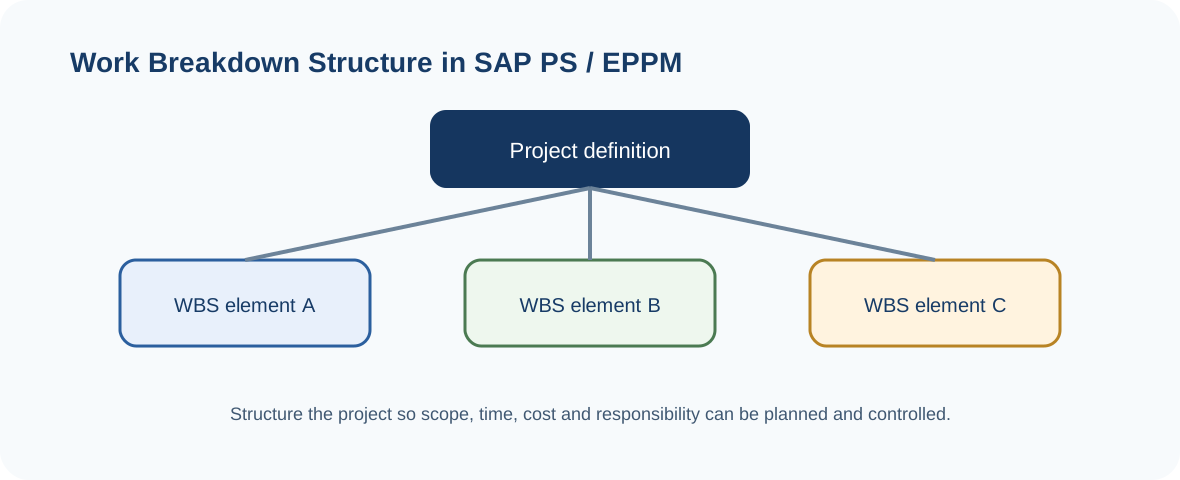
A work breakdown structure (WBS) is the hierarchical model of the work to be performed in a project. In SAP Project System, the hierarchy is built from WBS elements beneath the project definition. Those elements let the project team organize scope and create meaningful points for planning, dates, responsibility, costs, commitments and reporting.
Why projects need a WBS
A project can be described as one large objective, but it cannot be managed effectively at that level. Teams need a structure that divides the objective into phases, deliverables, functions or work packages. SAP documentation describes the WBS as a basis for organization and coordination and as a foundation for subsequent planning and project control.
The exact decomposition depends on the project. A construction project may organize by physical object and phase. An internal transformation may organize by workstream, country and deliverable. The goal is not to create the deepest possible hierarchy; it is to create a structure that supports decisions and accountability.
Project definition versus WBS elements
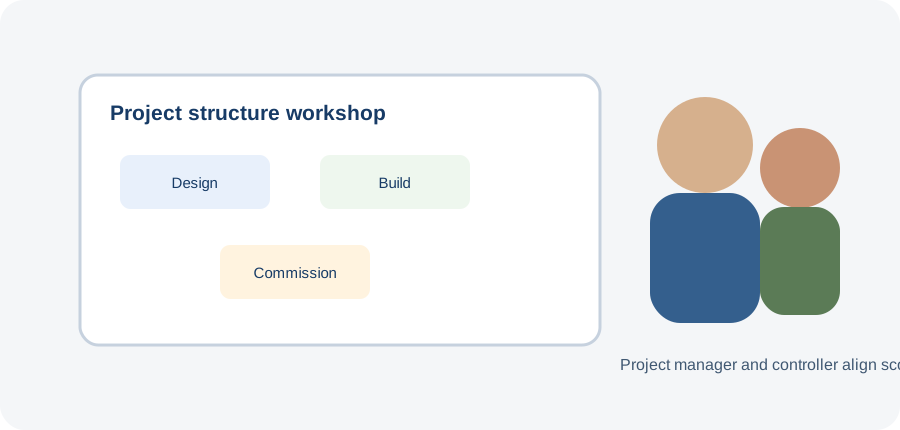
The Project Definition provides the project-wide framework. The WBS elements sit below it and describe progressively more specific parts of the work. SAP documentation notes that a WBS can be structured by phase, function or object, and that WBS elements may represent tasks, partial tasks or work packages.
This distinction matters when deciding where information belongs. Project-wide organizational or default information belongs at the project definition where appropriate; responsibility, dates, account assignment and other control attributes may be maintained at the WBS element level depending on the scenario.
What a good WBS enables
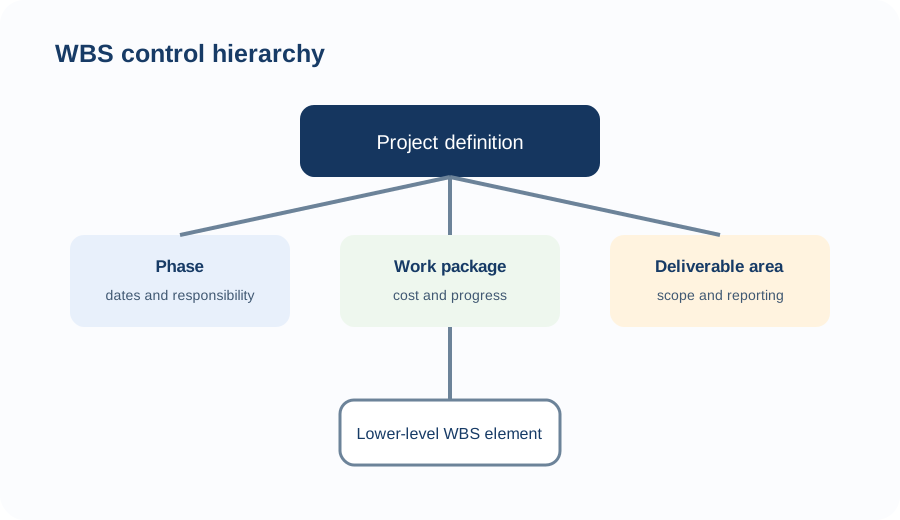
A useful WBS supports planning and reporting at the level where management decisions are made. WBS elements can become reference points for planned and actual dates, cost planning, commitments, actual cost collection, budget or responsibility. SAP S/4HANA project-planning documentation describes WBS elements as portions of the project that can be planned, monitored and controlled for time, budget and costs.
Do not confuse structure with sequence
A WBS primarily answers what parts of the project exist? It is not automatically the detailed execution sequence. In classic Project System, networks can represent activities and relationships where process sequencing and capacity planning are important. A project may use WBS alone or combine WBS and networks depending on the management need.
Consultant thinking: design for control, not decoration
A WBS should make ownership and reporting easier, not merely look tidy. If every small task becomes its own element, maintenance can become excessive. If the hierarchy is too coarse, teams lose visibility into cost, schedule and responsibility. Start from the decisions the project needs to make and build the hierarchy to support those decisions.
Continue with Project Definition and the SAP PS / EPPM hub.