
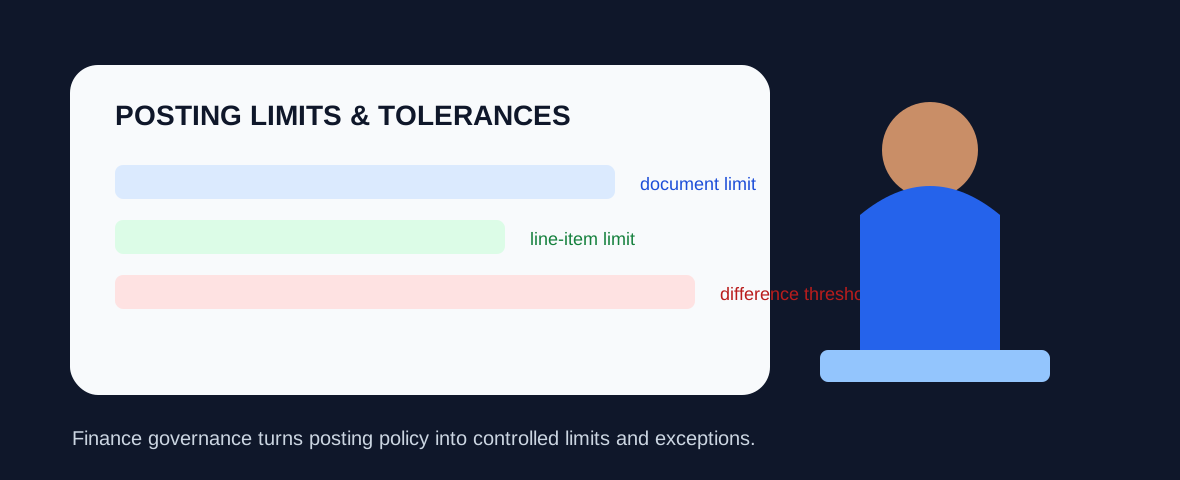
In SAP FI, tolerance groups define limits that determine what users or accounts may post and how small differences can be handled. Depending on the use case, tolerances can govern document and line-item amounts, cash-discount differences, payment differences, or differences during G/L clearing. They are therefore a control mechanism around who may post what and which exceptions the system may absorb automatically.
Why tolerance groups matter
Finance teams rarely want every user to have identical posting authority. A junior accountant may be allowed to post routine documents up to a defined value, while larger entries require another role or approval path. The same principle applies to automatic difference handling: a small rounding difference may be acceptable, while a larger mismatch should stop and be investigated.
This makes tolerance groups complementary to other FI controls such as posting keys, field status and posting periods. Those controls answer different questions; tolerances answer how much deviation or posting authority is acceptable.
Employee tolerances and G/L clearing tolerances are related but distinct
SAP documentation for automatic clearing identifies configuration for tolerance groups for employees and tolerance groups for G/L accounts. Employee tolerances can define posting and difference limits for users. G/L-account tolerances can participate in clearing scenarios where acceptable differences are handled according to configured rules and automatic account determination.
The important design lesson is not to assume one tolerance object solves every exception. The consultant should identify the business event first: manual journal posting, customer or supplier clearing, or G/L open-item clearing. Then select the tolerance control that governs that event.
What a consultant should decide before configuration
Clarify the posting population, the maximum document and line-item limits by role, the treatment of payment or clearing differences, the accounts used for automatic differences, and how exceptions are reviewed. Also confirm whether accounts are eligible for the intended clearing behavior; SAP documents restrictions for certain open-item-management scenarios.
Practical example
Suppose routine finance users can post journals up to ₹500,000, senior accountants up to ₹2,000,000, and anything higher requires a controlled process. Separately, the company may allow very small G/L clearing differences to be posted automatically to a designated difference account. These are two control decisions with different owners and risks, even though both use the language of tolerance.
Common mistake
Do not copy tolerance values from another company code without understanding why they exist. A technically valid value can still be a poor control if it exceeds approval policy, hides material differences, or creates inconsistent authority between teams.