
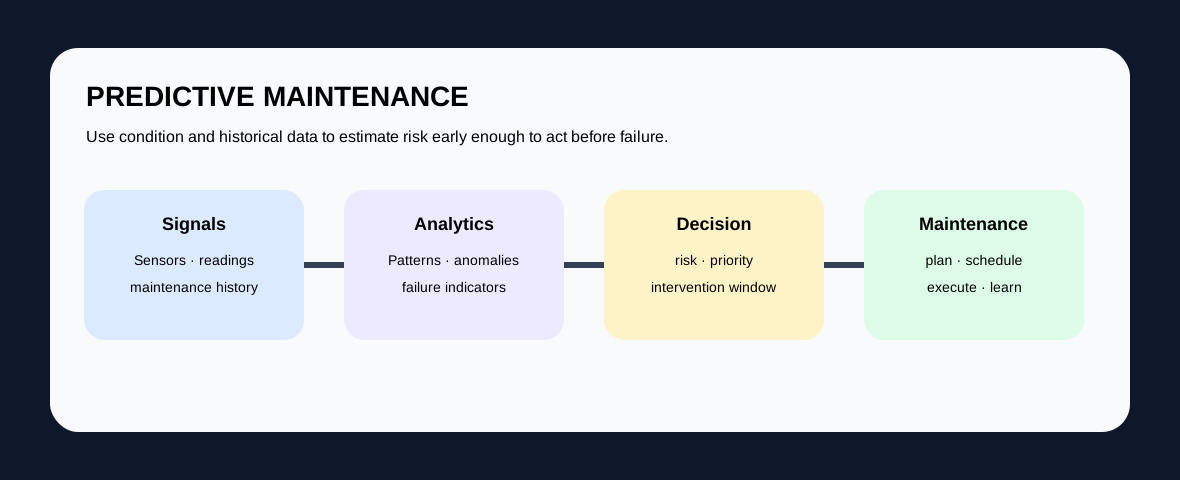
Predictive maintenance is a data-driven strategy that looks for patterns, anomalies or forecasts indicating that an asset is likely to degrade or fail. Its purpose is not to promise an exact failure date; it is to give maintenance teams enough evidence and lead time to plan the right intervention before an unplanned breakdown.
How predictive differs from preventive maintenance
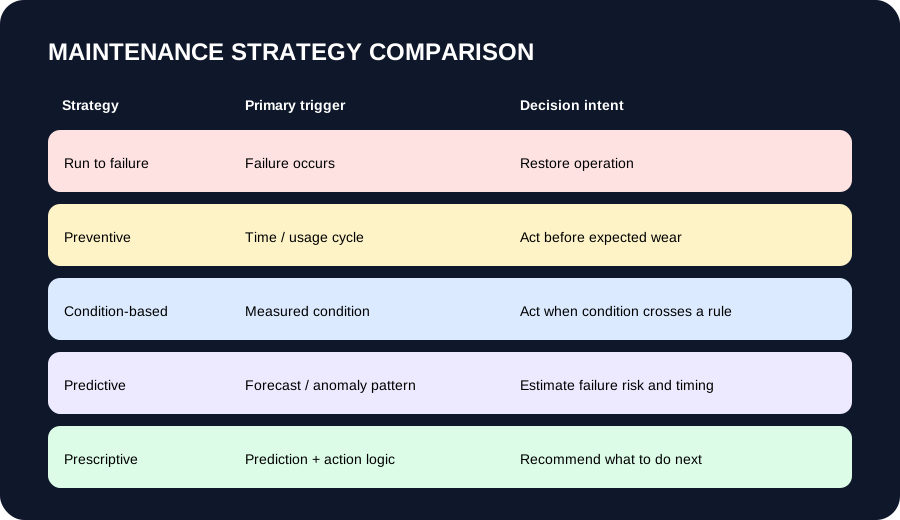
Preventive maintenance acts on a predefined time or usage cycle. Condition-based maintenance reacts when a measured condition reaches a defined rule or threshold. Predictive maintenance goes further by using trends, historical behavior or analytical models to estimate future degradation or failure risk. Prescriptive approaches add another layer by recommending an action based on that prediction.
The data pipeline matters
Useful prediction depends on trustworthy asset context. Technical master data, sensor or condition readings, operating history and maintenance history need to describe the same physical reality. SAP Asset Performance Management and related intelligent asset capabilities can use condition monitoring, analytics and failure-pattern information to support reliability decisions. Poorly contextualized readings can produce alerts without useful maintenance meaning.
From early signal to maintenance work
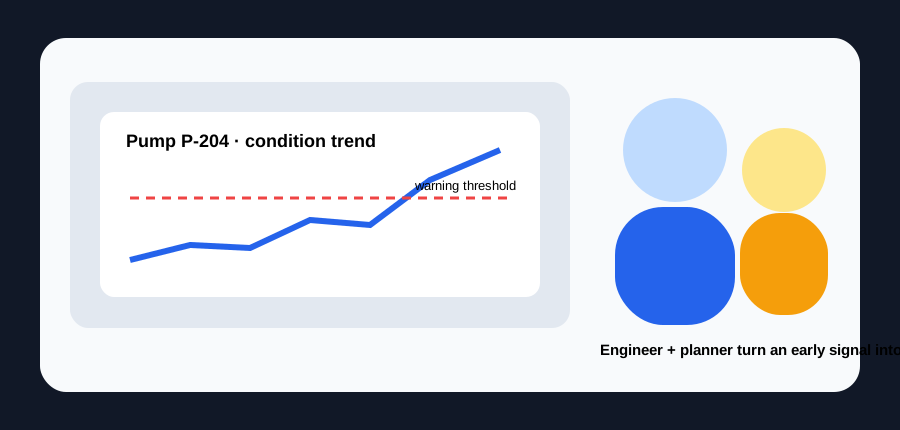
A prediction is not the end of the process. Teams still need to assess asset criticality, verify the signal, decide whether intervention is justified, plan skills and spare parts, create or adjust maintenance work and capture the execution result. Closed-loop asset processes can connect condition insight with maintenance planning and orders so that the outcome becomes part of the history used for future decisions.
What predictive maintenance cannot promise
Prediction is probabilistic. False alarms, missed events and changing operating conditions remain possible. A model that works for one asset population or failure mode may not transfer cleanly to another. Predictive maintenance is therefore strongest where the failure mode matters, the relevant indicators can be measured, enough usable data exists and the organization has a practical response when risk rises.
Consultant thinking
Start with the business failure mode rather than the technology. Ask which asset is critical, what degradation can be observed, which data supports that signal, who owns the alert, what threshold or risk level should trigger review, how the decision becomes executable maintenance work, and how the final result feeds back into reliability analysis. The operating response matters as much as the prediction.
Continue with Preventive Maintenance, Measuring Points and Counters, Maintenance Plans, and the SAP EAM / PM hub.