
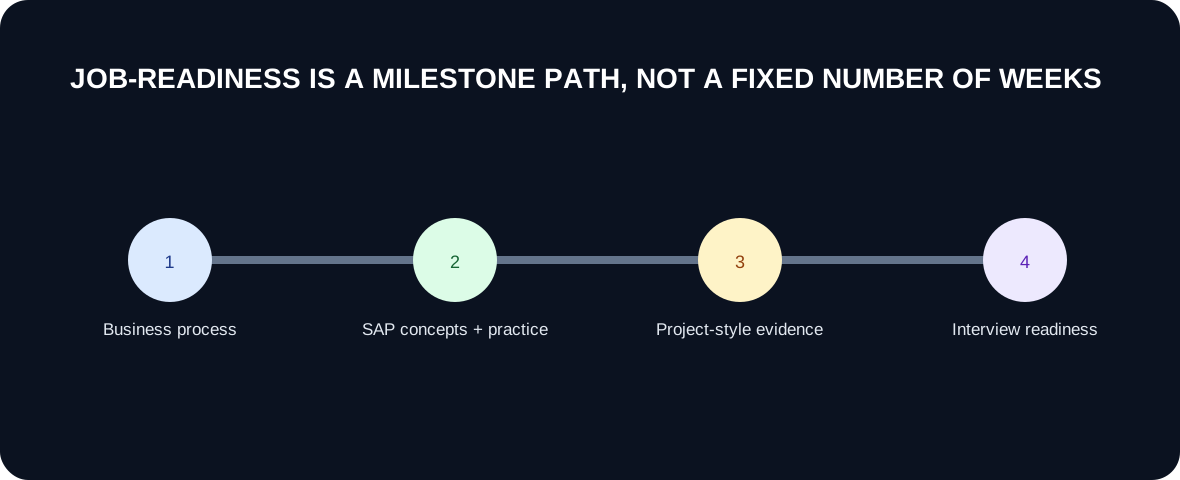
Becoming job-ready in SAP takes as long as it takes to build four things: business-process understanding, reliable SAP concept knowledge, enough practice to explain and troubleshoot realistic scenarios, and evidence that you can communicate your thinking in a project or interview context. Your previous domain experience can shorten some parts; starting from scratch can lengthen them.
Why a fixed timeline is misleading
Two learners can spend the same number of weeks and reach very different levels. An accountant learning FI may already understand journal entries, closing and controls, while someone new to finance must learn both accounting and SAP. A production engineer learning PP may already understand planning and shop-floor terms. Time spent is therefore a weak measure unless you also ask what capability was built.
SAP Learning presents Learning Journeys as structured paths for building skills, and SAP Certification materials emphasize role- and skill-oriented preparation. Those official resources support a milestone-based view: the goal is demonstrable skill, not merely elapsed time.
Milestone 1: business-process foundation
You should be able to describe the process behind your chosen SAP path without relying on screen names. For FI that may mean how transactions affect ledgers and closing; for MM, how a requirement becomes a purchase and invoice; for SD, how a customer order reaches delivery and billing; for PP, how demand becomes planned and executed production.
Milestone 2: SAP concepts and practice
Know the important master data, documents, organizational structures and control points for your path. Then practice realistic scenarios. The purpose of practice is not to memorize clicks but to see cause and effect: what changes when data is missing, a date is wrong, stock is unavailable or a business rule blocks the process.
Milestone 3: project-style evidence
Create process maps, test scenarios, configuration rationales, issue analyses or other truthful portfolio evidence that does not claim fake client experience. The goal is to show how you think. A small but coherent example is more valuable than an inflated claim.
Milestone 4: interview readiness
You should be able to explain your chosen module, a core process, an integration point, a realistic exception and what you would investigate when something goes wrong. You should also be able to say what you do not know without bluffing.
Certification can support readiness, but it is not the whole definition
SAP describes certification as validation of skills and provides role-based certification paths and Learning Journeys for preparation. Certification can strengthen credibility, but job-readiness still depends on whether you can apply and communicate what you learned. Do not treat a credential as a substitute for process understanding and practice.
What to do next
Choose a focused path using how to choose your first SAP module, then build a weekly plan around observable milestones rather than promises such as “job-ready in X days.” Review skills employers expect from SAP freshers for the broader readiness picture.