
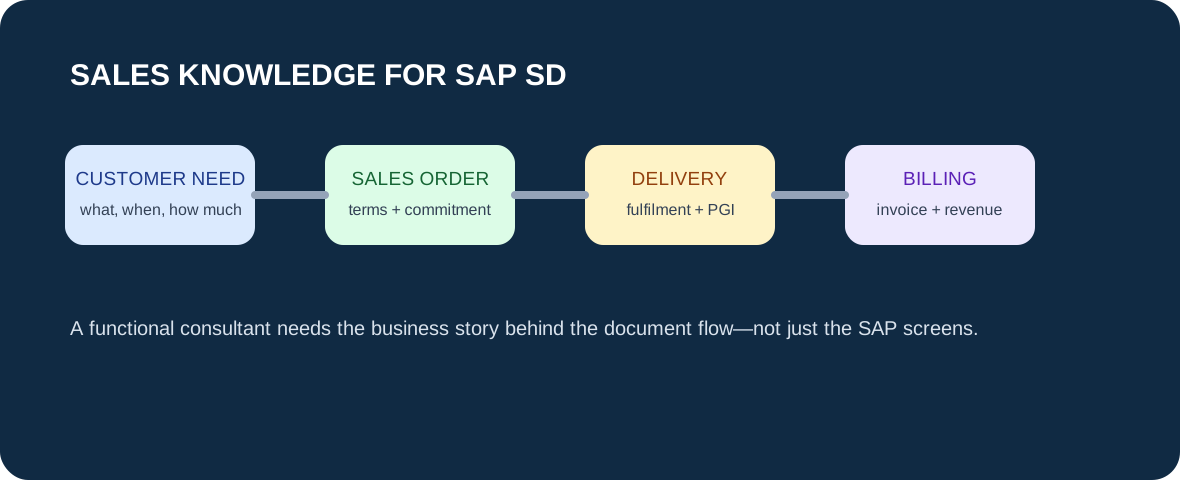
For entry-level SAP SD, you need practical sales-process knowledge rather than years of selling experience. You should understand customer and product data, inquiry and quotation concepts, sales orders, pricing, availability, delivery, post goods issue, billing, returns and the basic handoff to finance. The goal is to explain why each business step exists and what the next department needs from it.
Think order-to-cash, not transaction codes
A sales order represents a customer request and the commercial commitment around what will be supplied, when and under which conditions. Downstream, fulfilment moves through delivery and goods issue, while billing creates the customer-facing invoice according to the relevant order or delivery process. That end-to-end story is more important for a beginner than memorising individual screens.
The minimum business knowledge that helps
You should understand what makes a customer order valid, why requested and confirmed dates can differ, how price and discount conditions influence the commercial result, why delivery requires logistics readiness, and why billing may depend on the order or completed delivery. You should also understand that posting goods issue changes the logistics and accounting position of the transaction.
For a beginner, it is enough to explain the flow in business language: the customer asks, the company accepts and prices the request, logistics fulfils it, billing invoices it, and finance records and collects the receivable.
What you do not need on day one
You do not need deep expertise in sales strategy, every pricing scenario, advanced credit management or every international trade variation before starting SAP SD. Those topics matter later. First build a reliable picture of the normal sales and fulfilment lifecycle.
How to test your readiness
Explain a simple customer order without mentioning SAP screens: who captures the requirement, how price and date are agreed, what logistics must do, when ownership or stock position changes, when the invoice is created, and what finance receives. If you can explain those relationships clearly, you have the right foundation.
What to learn next
Move into customer and material sales data, sales document structure, pricing, availability checks, shipping, billing and integration with FI and MM. Keep asking what business decision each field or document controls.