
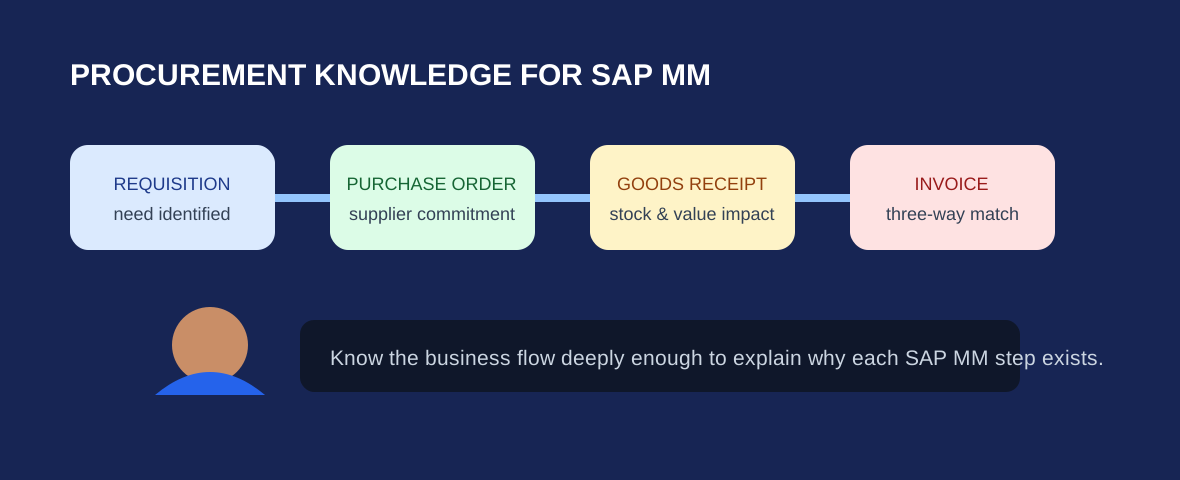
For entry-level SAP MM, you need a solid working understanding of procurement rather than deep strategic sourcing expertise. You should be able to explain requisition-to-order, supplier and purchasing master data, goods receipt, stock versus consumption procurement, invoice verification, basic approvals and common exceptions. Deeper process and configuration knowledge should grow as you move from learner to project consultant.
Start with the end-to-end process, not transaction codes
SAP Learning's sourcing and procurement foundation follows the process from procurement need through purchase requisition and purchase order to goods receipt and invoice entry. That is the right mental model for a learner. If you understand only which app or transaction creates a purchase order, you will struggle when a business user asks why account assignment is required, why stock changes at goods receipt, or why an invoice is blocked.
The minimum business knowledge to be useful
You should understand the difference between a purchase requisition and a purchase order, what master data is needed to buy from a supplier, how stock material differs from consumable procurement, what a goods receipt confirms, why movement of stock can create accounting entries, and how invoice verification compares the supplier invoice with preceding procurement documents. SAP Learning describes logistics invoice verification as the final step of the external procurement process, with information flowing back to purchasing and Financial Accounting.
You should also know the idea behind a three-way match: purchase order, goods receipt and invoice. You do not need to be an accountant, but you should understand why quantity, price and receipt history matter.
What you do not need on day one
You do not need years of supplier negotiation experience, advanced category management, or expert knowledge of every special procurement scenario before starting SAP MM. Those skills can be valuable, but they are not prerequisites for understanding core purchasing and inventory processes.
How to test whether your knowledge is sufficient
Try explaining a simple stock procurement scenario without naming SAP screens: who identifies the need, who authorizes it, what commitment is made to the supplier, what the warehouse confirms, what changes in inventory, what finance receives, and what happens if the invoice does not match. If you can explain that clearly, you have the right base for SAP MM learning.
What to learn next
Move from the core flow into purchasing master data, sources of supply, release procedures, inventory management and invoice verification. SAP's Purchasing in SAP S/4HANA course explicitly builds on prior knowledge of S/4HANA sourcing and procurement processes and basic Customizing, which is a useful signal for sequencing your learning.